Topics
-
2026-03-23
topics > No.45
Field Study Meeting of the Technical Committee Held in FY2025: Observing Invasive Species Control Activities in Akkeshi Lake and Bekambeushi Wetlands
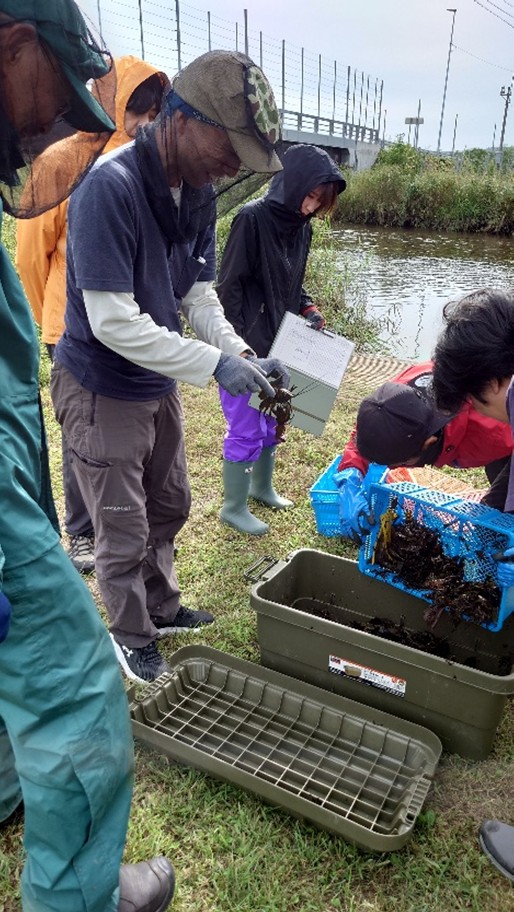
On September 10, 2025, a field study meeting of the Technical Committee was held at the Akkeshi Waterfowl Observation Center and along the Bekambeushi River.
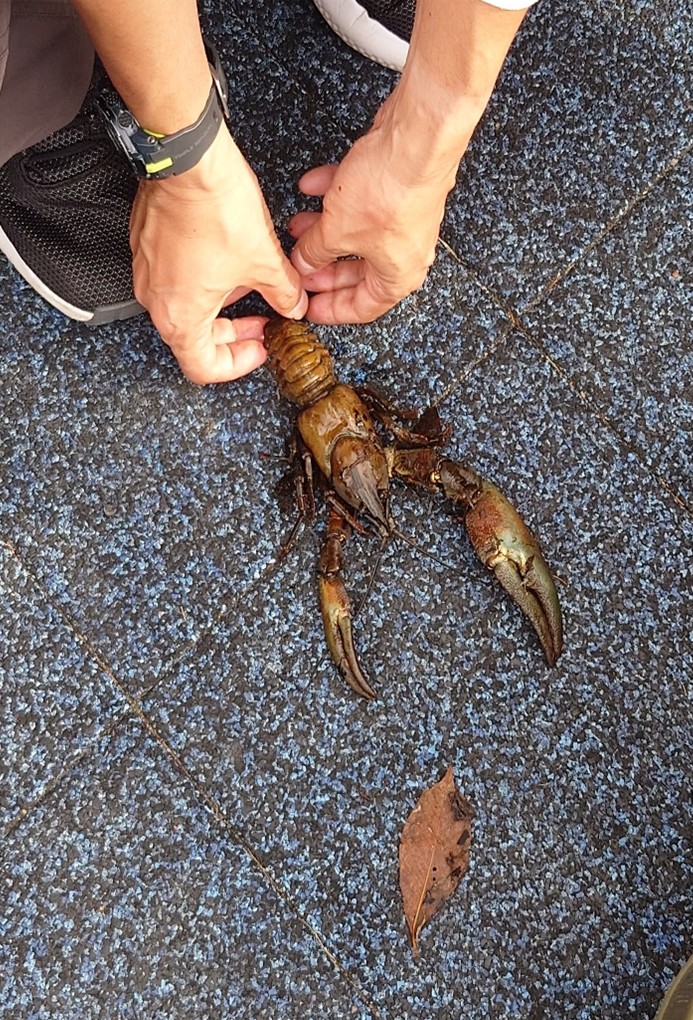
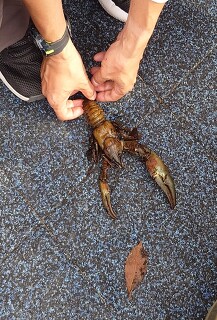
Participants visited the site of ongoing control activities for the invasive signal crayfish (Pacifastacus leniusculus) in the Akkeshi Lake and Bekambeushi Wetlands area. They observed the process of collecting crayfish traps as well as the handling and measurement of captured individuals.
During the visit, explanations were provided regarding the history and current status of the control activities, which have continued for nearly ten years. Participants also exchanged views on the impacts of invasive species on wetland ecosystems and fishery resources, as well as on future strategies for effective control.
Participants emphasized the importance of accumulating long-term data and conducting scientific analyses to strengthen the effectiveness of invasive species management. It was also noted that, in addition to volunteer efforts, the use of specialized techniques and stronger institutional support at the national level would be necessary.
Through this field study meeting, participants deepened their understanding of the importance of wetland ecosystem conservation and invasive species management, and it is expected that the outcomes will contribute to future research and public awareness activities.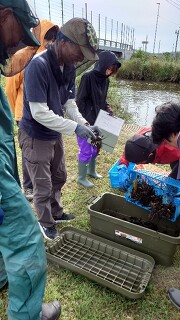
-
2026-03-23
topics > No.44
FY2025 JICA Training Program “Nature-based Solutions in Wetland Ecosystems: Toward a Nature-Positive Society”
From September 30 to November 12, we conducted the JICA training program “Nature-based Solutions in Wetland Ecosystems: Toward the Realization of a Nature-Positive Society.”
This training program focuses on the various benefits provided by wetland ecosystems, including those of the Kushiro Wetland. It aims to introduce Nature-based Solutions (NbS) as practical approaches to addressing social challenges such as climate change, natural disasters, water security, and biodiversity conservation.
The program is designed to strengthen the capacity of government officials and other practitioners from developing countries to plan solutions to social and environmental challenges in their own countries.
The training is implemented by the Kushiro International Wetland Center (KIWC) under commission from the JICA Hokkaido Center (Obihiro).
This year marked the final year of the three-year training cycle and served as the concluding program.
A total of seven participants involved in environmental administration took part in the training: two from Costa Rica, two from Ecuador, and one each from the Dominican Republic, Guatemala, and Peru.
During the training, participants visited rivers undergoing restoration projects in the Kushiro and Tokachi regions, as well as the Kuma River basin in Kumamoto Prefecture and sites in Saga Prefecture, including Nijinomatsubara and the Higashiyoka-higata. Through these visits, they learned about disaster prevention and flood control measures implemented in each region.
On the final day, participants presented their action plans, outlining how they plan to apply the knowledge and experience gained during the training to address challenges in their home countries.
We hope that the knowledge gained and the exchanges fostered through this training will contribute to wetland conservation efforts in the participants’ respective countries. -
2026-03-23
topics > No.43
Citizen Environmental Survey Conducted at the Numaoro River Restoration Site (FY2025)
In connection with this year’s World Wetlands Day theme, “Wetlands and Wisdom: Protecting Wetlands for Our Future,” we organized a winter walk around the Touro Lake wetlands and visited the Shibecha Town Museum “Nitai-To.”
Although the SL Fuyu no Shitsugen Train was delayed that day, we arrived safely at Touro Station. From there, we walked across the frozen marsh—an experience possible only in winter—and made our way to the museum.
During the walk, participants observed wetlands fragmented by roads, sphagnum bogs, and alder forests that change depending on nutrient conditions. Through these observations, we learned about how wetlands are formed and how plant communities change over time.
At the museum, we received explanations about the history of local settlement, the development of railways, the former Kushiro prison facilities, and the story of how the SL Fuyu no Shitsugen Train was revived using preserved railway cars. The visit concluded with an enjoyable quiz tour.
Thank you very much to everyone who joined us despite the cold weather. -
2026-03-23
topics > No.42
Citizen Environmental Survey Conducted at the Numaoro River Restoration Site(FY2025)
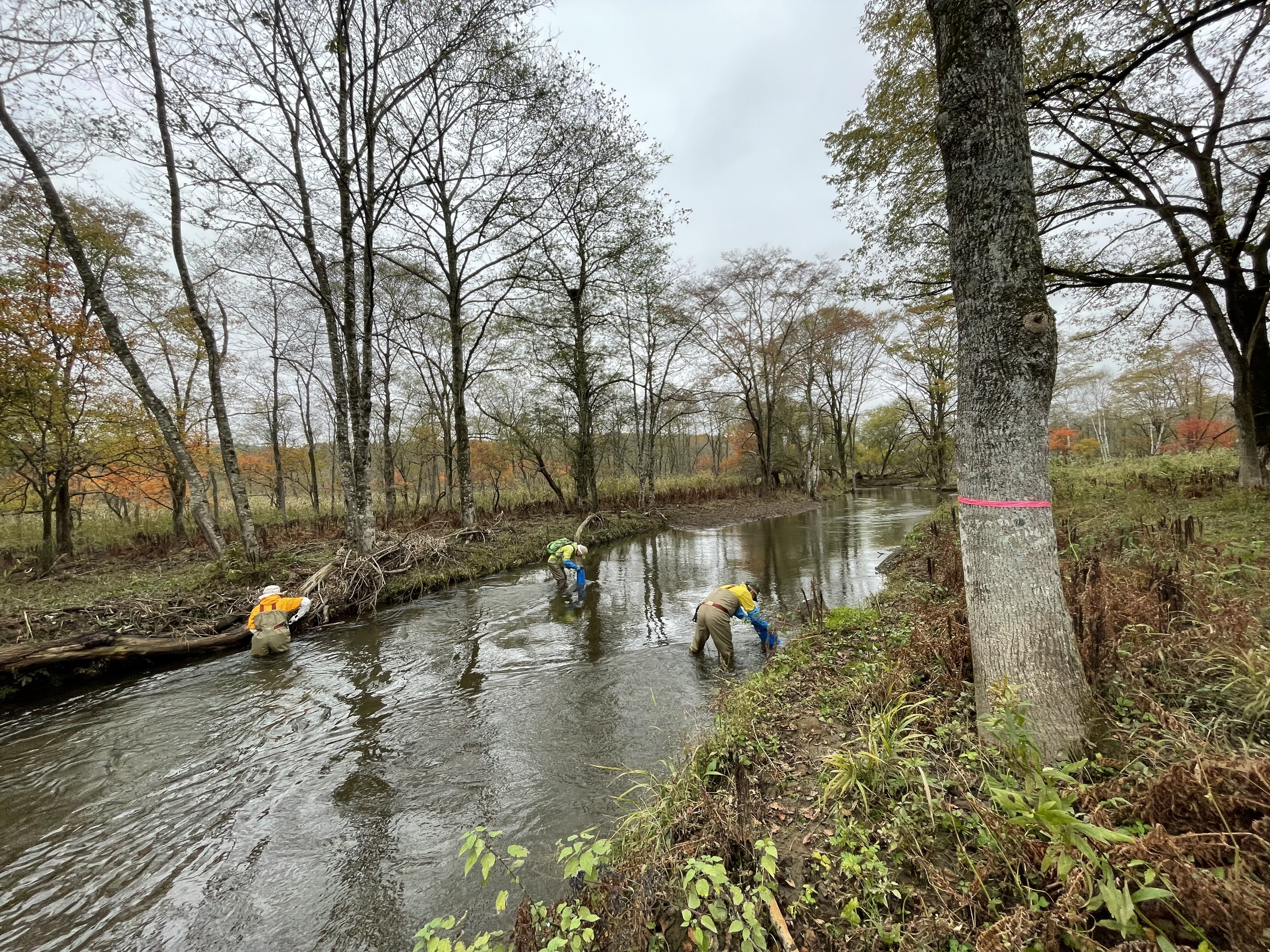
On October 18, 2025, a citizen environmental survey was conducted at the restored former river channel in the Numaoro area of Shibecha Town, Hokkaido.
The survey was carried out under the guidance of five members of the KIWC Technical Committee.
A total of seven local citizens participated, together with seven JICA trainees from Central and South America.
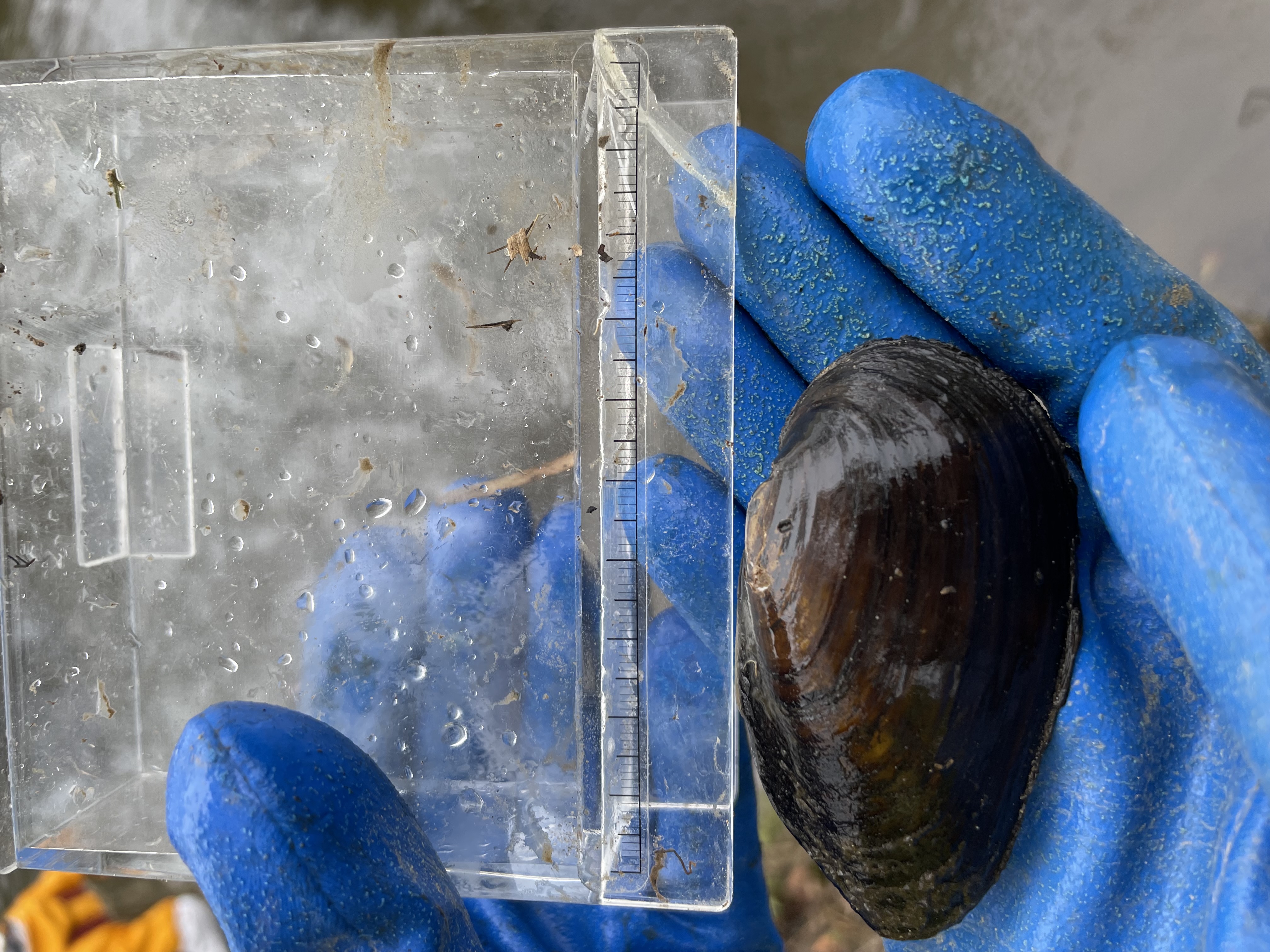
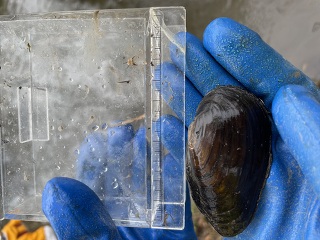
During the field survey, participants conducted a population check of the freshwater pearl mussel (Margaritifera laevis), an endangered species, and measured the grain size of riverbed sediments.
Only one live freshwater pearl mussel was found during the survey. However, a wide variety of aquatic organisms typical of slow-flowing environments were observed, suggesting that a new ecosystem is gradually developing in the restored meandering river.
Sediment analysis also revealed the presence of fine silt in the meander sections of the river. This indicates that the restored bends are capturing sand transported from upstream, demonstrating the ecological function of the restored channel.
After the fieldwork, participants gathered at the Toro Lake Eco-Museum Center for a reflection session. Mr. Shinsho, Chair of the KIWC Technical Committee, provided an overview of the survey results, followed by comments and impressions from the participants.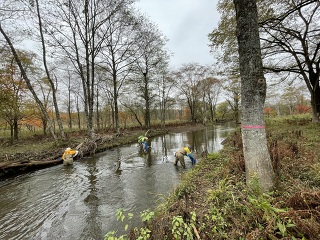
-
2024-11-16
topics > No.41
【Visit the Hunter Bird Observers Club's bird monitoring field】
Evening of November 16, we took a boat trip to the Hunter Bird Observers Club's bird monitoring field.
The vast bay, 2.5 times the size of Sydney Harbor, is home to the second largest number of birds in New South Wells, and is also famous for its oyster farming.
We were able to reunite on board with members of the Hunter Bird Observers Club, who came to Kushiro in May 2023.
We learned that the club conducts bird surveys jointly by government and private volunteers, and that fixed-point surveys are conducted monthly, and were introduced to some of the activities of the volunteer members.
Once again, we would like to express my heartfelt gratitude to Mayor Kerridge, and Mayor Andersson, all city council members and citizens, as well as wetland-related people and researchers, for their hospitality in hosting the delegation from Kushiro City.
We look forward to deepening our cooperation for a new decade of sister wetland exchanges and further development of both communities in the future.